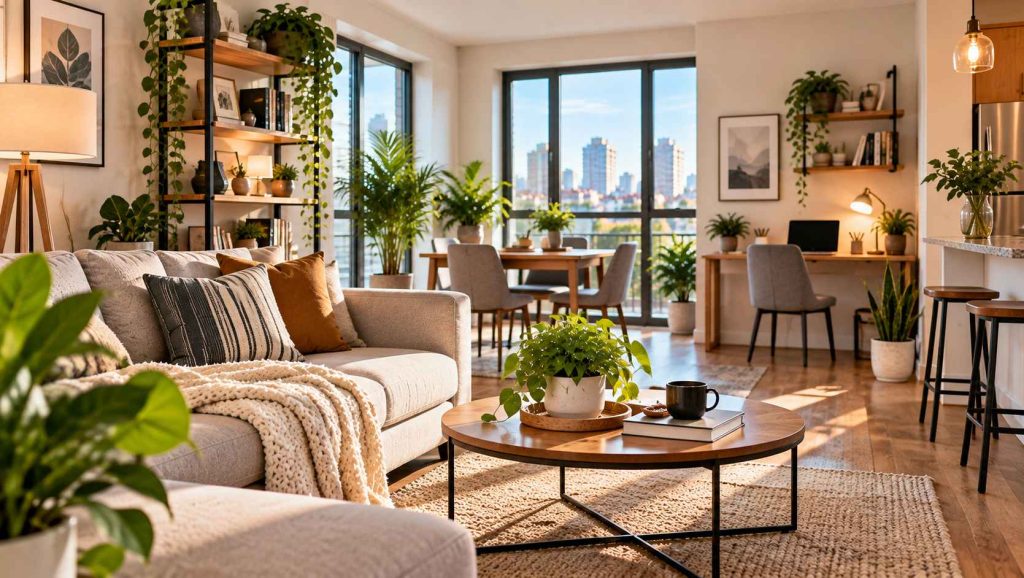

An apartment can start feeling crowded long before it is actually full. Often, the problem is not the number of square feet but how furniture, belongings, and everyday routines interact with the space. A chair placed in the wrong spot can interrupt movement, while a kitchen counter covered with frequently used items can make an entire room feel busier.
The good news is that renters do not necessarily need a larger apartment to create a more comfortable home. A few thoughtful changes to layout, storage, lighting, and daily habits can make the existing space work considerably better.
The goal is not to make every room look like a showroom. It is to create a home where the things you use regularly are easy to access, unnecessary clutter has somewhere to go, and the layout supports the way you actually live.
Start by Removing What You Do Not Need
Before buying storage containers or rearranging furniture, take a closer look at what is already in the apartment.
Clutter tends to accumulate gradually. A few unused kitchen gadgets, old clothing, extra paperwork, decorative items, and miscellaneous belongings can eventually take over drawers, shelves, and countertops.
Start with one area rather than attempting to reorganize the entire apartment in a single weekend. A kitchen drawer, entryway cabinet, or bathroom shelf is enough.
Ask a simple question: “Do I use this often enough to justify the space it takes?”
Items that are rarely used can be donated, recycled, stored elsewhere, or removed from the apartment where appropriate. The less unnecessary material competing for space, the easier it becomes to organize what remains.
Choose Furniture Based on Movement
Furniture should fit both the room and the way people move through it.
An oversized sofa may look comfortable in a showroom but become inconvenient when it leaves only a narrow path between the living room and kitchen. Similarly, a large desk may provide plenty of workspace while making the rest of the room difficult to use.
Before purchasing furniture, measure the available area. Consider not only the furniture’s dimensions but also the space needed to open doors, pull out chairs, walk around the room, and access storage.
Flexible furniture can also be helpful. A compact dining table that can accommodate additional people when needed, a storage ottoman, or a desk that can serve more than one purpose may be more practical than several single-purpose pieces.
The objective is to make the apartment feel open without leaving it empty.
Make Better Use of Vertical Space
When floor space is limited, look upward.
Tall shelving can provide useful storage without occupying as much floor area as a wide cabinet. Hooks, wall-mounted organizers, and vertical shelving can also help keep frequently used belongings accessible without spreading them across tables and counters.
Renters should always consider the limitations of their lease before attaching anything permanently to walls. If drilling, mounting, or other alterations are restricted, look for freestanding alternatives instead.
Even simple changes can make a difference. A tall bookshelf can separate books and decorative items from everyday living areas, while a narrow shelving unit may make better use of an otherwise unused corner.
Give Small Spaces a Clear Purpose
Open-plan apartments can sometimes feel larger but less organized because everything happens in the same visual area.
Creating informal zones can solve this problem without building walls.
A rug can visually define a living area. A small desk positioned near natural light can establish a work zone. A bookshelf can help separate a workspace from a lounge area. Even the orientation of furniture can communicate that one part of a room has a different purpose.
This is particularly useful for people who work from home. Instead of allowing laptops, paperwork, chargers, and office supplies to spread throughout the apartment, establish a dedicated work area, even if it occupies only one corner.
When work ends, having a defined zone also makes it easier to put work-related items away.
Keep Entryways Under Control
The entrance to an apartment often becomes a collection point for shoes, coats, bags, keys, mail, and packages.
Because it is the first area you encounter when coming home, keeping it organized can make the entire apartment feel more orderly.
A small shoe rack, basket, wall hooks where permitted, or compact console can give frequently used items a designated home. Keep only the things that are actually needed near the entrance.
A simple routine helps too. Instead of allowing mail and receipts to accumulate on a nearby surface, deal with them when they come in. Put keys in the same location every day. Return shoes and outerwear to their normal places rather than leaving them in walkways.
Good organization is often more about consistency than expensive storage products.
Improve Lighting Without Major Changes
Lighting can influence how spacious and comfortable an apartment feels.
A single bright ceiling fixture may illuminate a room but does not necessarily create the most pleasant atmosphere. Adding renter-friendly lamps can introduce different levels of light for reading, working, relaxing, or entertaining.
Use the existing layout as a guide. A floor lamp beside a reading chair, a desk lamp in a work area, or a small table lamp in a darker corner can make the room feel more balanced.
Mirrors can also help reflect available light and create a greater sense of openness, provided they are positioned thoughtfully.
There is no need to completely redesign the lighting scheme. Sometimes changing where light is placed is enough to make a room feel more functional.
Look at the Building Experience Too
An apartment does not exist in isolation. The way residents interact with shared spaces, building procedures, maintenance contacts, and property management can influence how comfortable everyday life feels.
People comparing apartment communities from Osgoode Properties or similar professionally managed rental options can consider these broader details alongside the individual apartment. Knowing where to direct maintenance questions, understanding building routines, and keeping important contact information accessible can make day-to-day issues easier to manage.
This is also a reminder that renters should evaluate more than photographs when choosing a home. A well-arranged apartment may be appealing, but practical factors such as building upkeep, communication, shared facilities, and the surrounding neighbourhood can matter just as much over time.
Make the Kitchen Work Harder
Kitchens can become cluttered quickly because so many everyday activities happen there.
Start by keeping the most frequently used items within easy reach. Less-used appliances and serving pieces can be placed farther back in cupboards or stored elsewhere if appropriate.
Avoid allowing counters to become permanent storage areas. A small tray can group commonly used items such as cooking oils, while drawer organizers can prevent utensils from becoming mixed together.
The same principle applies to the refrigerator. Keeping similar foods together makes it easier to see what is available and can reduce the temptation to buy items that are already hiding at the back.
An organized kitchen does not have to be perfectly minimalist. It simply needs a system that makes everyday tasks easier.
Create Smarter Bathroom Storage
Bathrooms often have limited storage, so every available area matters.
Use drawer organizers, small baskets, and stackable containers where suitable. Group similar products together rather than keeping everything mixed in one cabinet.
For items used every day, accessibility is more important than appearance. Products that are used once or twice a year can be stored farther away.
Avoid filling every shelf simply because there is available space. Leaving some room makes it easier to put things away and prevents the bathroom from becoming visually overwhelming.
Build Simple Maintenance Routines
Organization becomes much easier when small tasks are handled regularly.
Instead of waiting for clutter or cleaning to become overwhelming, establish simple routines that fit naturally into the week. A few minutes spent returning items to their proper places can prevent larger organizing sessions later.
The same approach applies to apartment maintenance. Keep important building contacts, move-in documentation, appliance information, and other useful records somewhere easy to find.
If something in the apartment needs attention, report it through the appropriate property-management process rather than allowing a minor issue to become part of the background.
Renters should also keep records of relevant communication and check their lease before making changes to the unit.
Let the Apartment Evolve
One of the easiest mistakes renters can make is trying to finish an apartment immediately after moving in.
It is tempting to purchase furniture, storage products, decorations, and accessories all at once. But living in the space for a few weeks often reveals what is actually needed.
You may discover that the chair you thought belonged beside the window is better elsewhere. A storage cabinet might turn out to be unnecessary. The dining table may work better against another wall. A previously unused corner could become the perfect reading or work area.
Give the apartment time to teach you how it should be organized.
Make Space Work for Your Life
A comfortable apartment does not depend on having the most furniture, the latest décor, or a large amount of storage.
It comes from understanding how the space is used and making small adjustments that support those routines.
Clear unnecessary clutter, choose furniture carefully, use vertical space where appropriate, establish practical zones, and keep everyday items easy to access. Most importantly, avoid making permanent changes without first checking what your lease allows.
Over time, these simple decisions can turn an apartment from a collection of rooms into a home that feels easier to navigate, maintain, and enjoy.

